On 28 July 2026 the Minister for Primary Industries announced new Queensland drought declarations and the reinstatement of Drought Carry-on Finance Loans and Emergency Drought Assistance Loans for eligible Queensland primary producers. Full details of these loans will be available once administrative arrangements are finalised. Please monitor QRIDA’s website and social media channels for more information about when these loans will open to application and how to apply.
Page title
Milking efficiency: power smarter on your dairy farm
Page title
Milking efficiency: power smarter on your dairy farm
Image and text
Sam Spina
14 April 2026
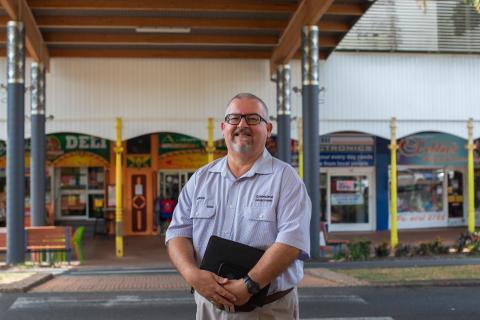
By QRIDA Regional Area Manager for Far North Queensland, Sam Spina
Energy costs can be one of the heaviest drains on a dairy farm, from milk cooling and hot water to irrigation and pumping. But smarter energy use doesn’t just reduce bills, it can make day-to-day operations more productive and resilient.
Across Queensland, dairy producers are finding that targeted improvements can deliver results.
For example, an energy efficiency audit carried out by the Queensland Famer’s Federation (QFF) found an Atherton Tablelands dairy saved $10,047 and 9,964kWh per year by improving their irrigation with the installation of an automation system.
Here’s five on-farm energy efficient upgrades dairy farmers could consider: 
- Focus on milk cooling efficiency: Milk cooling runs every day. Keeping coolers and refrigeration systems well maintained can significantly reduce energy use.
- Upgrade hot water systems: Hot water for wash down is essential, but energy intensive. Efficient systems, good insulation, and timers help avoid unnecessary heating costs.
- Optimise irrigation and pumping: Correct pump sizing, irrigation layout, and fixing leaks or blockages reduce energy use while supporting consistent pasture growth.
- Upgrade vacuum pumps and motors: Milking equipment is a constant energy draw. More efficient pumps or variable speed drives can cut power use without affecting performance.
- Look beyond the shed: Simple upgrades like switching to LED lighting, maintain cooling systems, improving ventilation, and considering renewable energy options such as solar can all contribute to lowering overall energy use.
A concessional QRIDA Sustainability Loan of up to $1.3 million can help eligible dairy producers fund on-farm energy efficient upgrades.
Visit QRIDA's Sustainability Loan webpage or call QRIDA on 1800 623 946 to find out more about how you can power more and spend less with QRIDA.
Visit the Queensland Ag Energy Hub website to find out more about energy information for farmers.
Note: The case study referred to in this article is a Queensland Ag Energy Hub case study. The Queensland Ag Energy Hub is managed by the Queensland Farmers’ Federation (QFF) and was funded by the Queensland Government.
News