
On 28 July 2026 the Minister for Primary Industries announced new Queensland drought declarations and the reinstatement of Drought Carry-on Finance Loans and Emergency Drought Assistance Loans for eligible Queensland primary producers. Full details of these loans will be available once administrative arrangements are finalised. Please monitor QRIDA’s website and social media channels for more information about when these loans will open to application and how to apply.
Page title
Frequently asked questions
Page title
Frequently asked questions
Text
QRIDA has developed a wide range of frequently asked questions to help you find the answer you need. View them here.
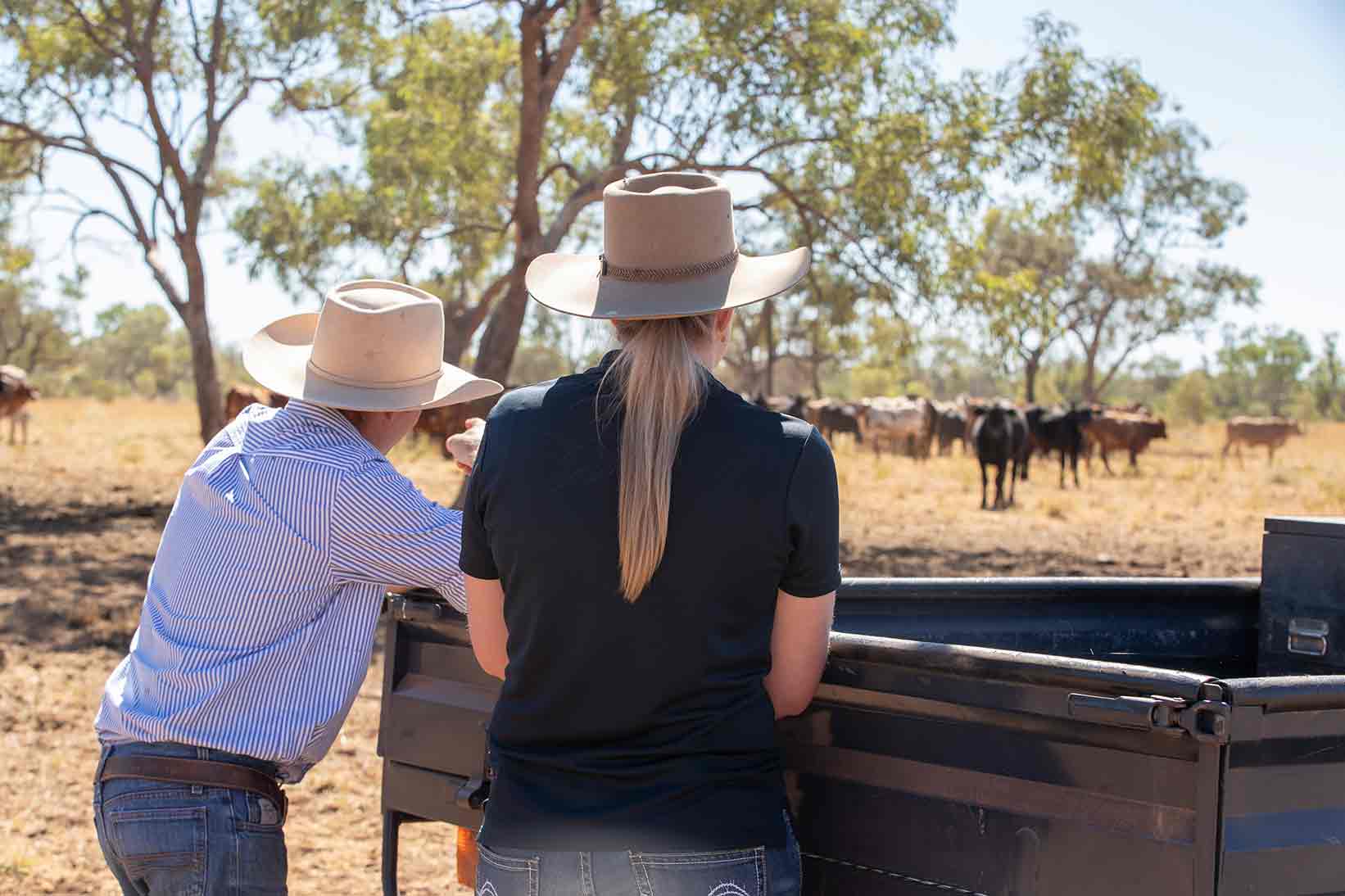
Text
View FAQS for QRIDA programs and services here.
Rebate funding is not guaranteed at any stage of the application process and applications will be assessed in order of receipt.
No. You cannot obtain the rebate if you have received other Government funding for the same eligible advice.
If your application is successful QRIDA will reimburse the funds to your nominated bank account if you have provided evidence of already paid invoices.
Yes, however you can only apply for the premises located in the eligible local government areas.
An "essential good" is food, drink or a household item used for domestic purposes, other than:
- an alcoholic beverage; or
- bathroom equipment; or
- confectionery; or
- clothing; or
- an electrical appliance; or
- a kitchen utensil; or
- manchester; or
- a soft drink containing sugar; or
- whitegoods.
Examples of a household item used for domestic purposes:
- a household cleaning product, toothpaste, toilet paper
None of the following is an "essential good":
- fuel
- furniture or a furnishing
- hardware
- any of the following under the Tobacco and Other Smoking Products Act 1998
- a tobacco product
- a smokeless tobacco product
- vaping goods
- a personal vaporiser related product.
- a lottery ticket under the Lotteries Act 1997.
An excluded person from providing software and training services in order to claim Establishment Assistance means:
- an owner or employee of the business
- a relative, other than a qualified relative, of an owner or employee of the business
- a related body corporate of an owner of the business
- another body corporate, if an owner of the business is a director, or holds at least 10% of the issued shares, of the body corporate, and
- a beneficiary of a trust of which a person mentioned above or a qualified relative of an owner or employee of the business, is trustee.
No. Only software installed after the commencement of the Scheme will be considered.
QRIDA will contact you via telephone, email, SMS or post. Should you be concerned about whether contact you have received is genuine, please contact QRIDA on 1800 623 946.
Under the Remote Communities Freight Assistance Scheme, an “eligible business” is defined as a business which holds an Australian Business Number, is registered for GST and has a bank account in the name of the business.
Questions concerning your personal taxation circumstances should be directed to your taxation adviser or the Australian Taxation Office on 13 72 86.
Yes, you are entitled to a decision review. See reviewing a decision for more information.
Direct damage is physical damage that occurred as a result of the event. For example, immediate damage caused by flood water flowing through your property, or damage to a fence because of a bush fire on your property.
Indirect damage is the losses sustained as a consequence of the disaster. For example, downturn in customer foot traffic from road closures, loss of income or spoilage due to power outages.
For direct damage you may be eligible for an Extraordinary Disaster Assistance Recovery Grant and/or a Disaster Assistance Loan. For indirect damage you may be eligible for an Essential Working Capital Disaster Assistance Loan.
The certificate of insurance and details of your claim are required to apply for this grant. The grant cannot cover repairs that will be covered by insurance. However, items that are not covered, and your excess may be eligible.
Yes, we welcome you to apply before you know the outcome. QRIDA will work with you to determine what damage may be covered by your insurance policy.
Please note that assessing applications before finalising insurance claims may take longer than if you were to apply after the insurance outcome is known.
Yes. Payment for your nets will be processed when QRIDA receive confirmation of surrender of usable nets from the Department of Primary Industries (previously Department of Agriculture and Fisheries) (DPI), up to the length specified in your application.
The Department of Primary Industries will organise a suitable net collection time, or advise of a local net drop off point, based on the information in your application. If you need to update your net collection information, please contact future.fishing@daf.qld.gov.au
Yes, you can surrender a usable net, however will not receive assistance for the surrender if you are not an eligible applicant. Please see more information at on the Department of Agriculture and Fisheries website or email future.fishing@daf.qld.gov.au
No. The payment estimated in your QRIDA application is the maximum amount of assistance that you can receive. Please make sure you accurately measure your nets before submitting an application.
Yes, if the applicant is registered for GST.
Yes, these other nets and materials can be surrendered, however, you will not receive assistance for their surrender. Please visit https://www.daf.qld.gov.au/business-priorities/fisheries or email future.fishing@daf.qld.gov.au for more information about how to surrender other nets and netting material.
Once you have received confirmation from QRIDA that your application has been approved, you will have 12 months to supply QRIDA tax invoices detailing the works completed. Once confirmation that works completed has been approved, QRIDA will pay the approved amount of assistance into your nominated bank account.
Yes, however only the eligible work completed will be considered for assistance.
Yes, if QRIDA determines the quote reflects reasonable expenses for the costs of service.
A diversification plan is required for a business to be eligible for this grant. Details on the requirements of a diversification plan are detailed in the program Guidelines.